How 4:6 Breathing Boosts Heart Rate Variability, and Performance in the Workplace
In today’s work environment, cognitive overload, rapid decision-making, and constant context-switching can quietly push the nervous system into a stressed state. One of the simplest and most scientifically supported tools to counter this is paced breathing, specifically the 4:6 breath (inhale for 4 seconds, exhale for 6).
To show just how quickly this technique works, I ran a comparison using a biometric reader. For three minutes, I breathed normally. Then, for another three-minute session, I practiced 4:6 breathing.
The difference in my heart rate variability (HRV) was dramatic.
What the Data Showed
Normal breathing: My HRV stayed low and erratic, reflecting a more activated sympathetic (“fight-or-flight”) state, with an average cadence of 2.1.
4:6 breathing: The wave pattern became smooth, coherent, and significantly higher: a sign of a calm, regulated parasympathetic response, with an average cadence of 4.8 (more than doubled!)
This shift happened in under three minutes. See the graphs below for a visual.
Why HRV Matters at Work
Heart rate variability is one of the most reliable indicators of how well the nervous system can adapt to pressure. Higher HRV is linked to:
Sharper cognitive function
Stronger emotional regulation
Better decision-making under stress
Improved resilience and recovery
More creative, strategic thinking
In a work setting, this translates to fewer reactive decisions, clearer leadership presence, and more grounded communication - especially in high-stakes or fast-paced environments.
How the 4:6 Breath Works
The extended exhale activates the vagus nerve and shifts the body into a parasympathetic (rest-and-regulate) state. This calms the stress response, slows the heart rate slightly, and increases HRV, often immediately, as my data showed.
Even a short 2–3 minute practice can:
Reduce cortisol
Improve focus and clarity
Regulate emotions during difficult conversations
Interrupt stress spirals
Restore coherence after back-to-back meetings
The Takeaway
4:6 breathing is a high-impact, low-effort performance tool. It doesn’t require privacy, equipment, or long breaks - just a minute or two of intentional breathing. My own biometric results show how quickly HRV can improve, demonstrating that small practices can create measurable physiological shifts that support better leadership, clearer thinking, and healthier workplace cultures.
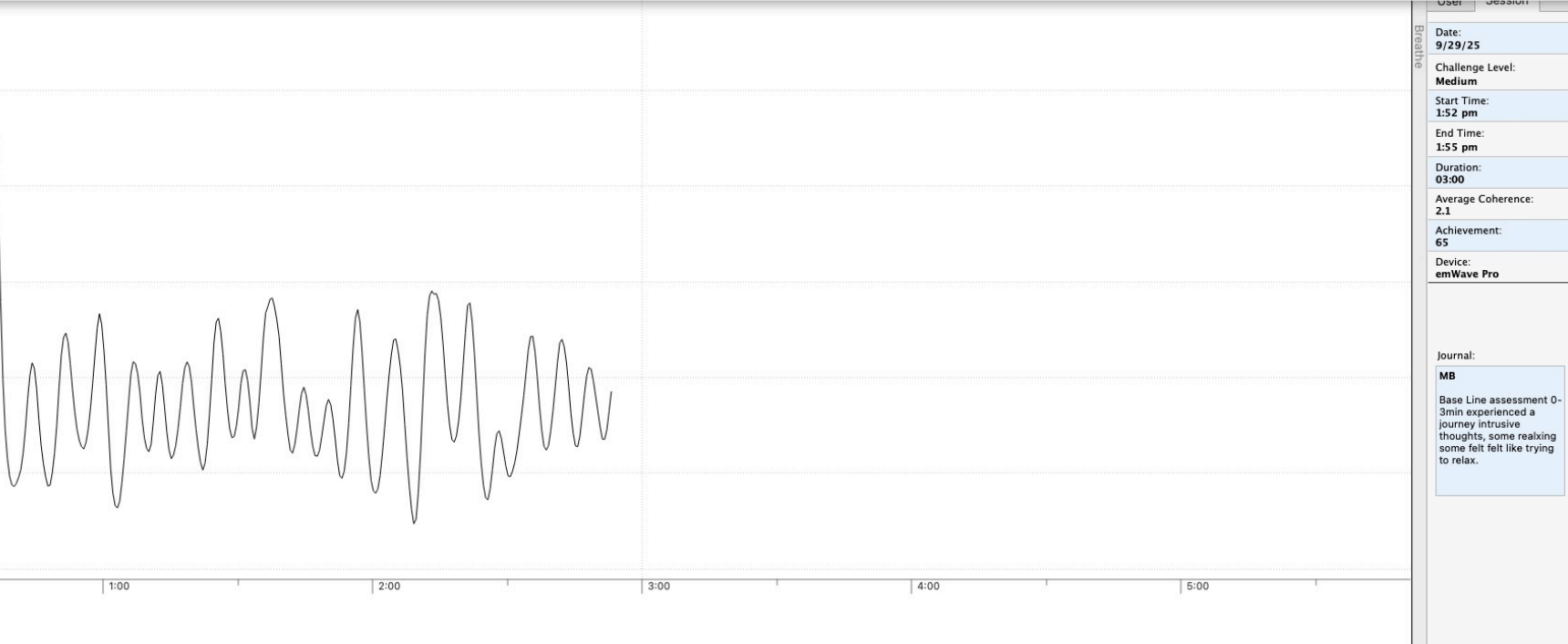
HRV at Rest, Average Cadence of 2.1
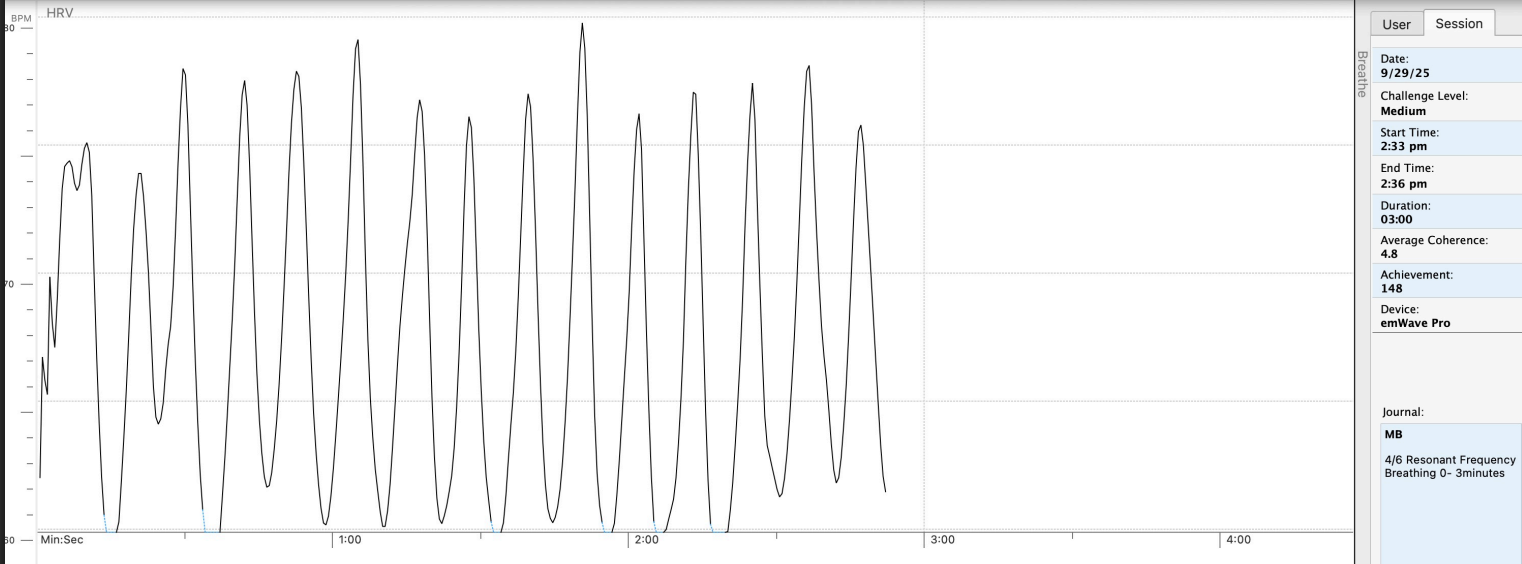
HRV with 4:6 Breath Work, Average Cadence of 4.8